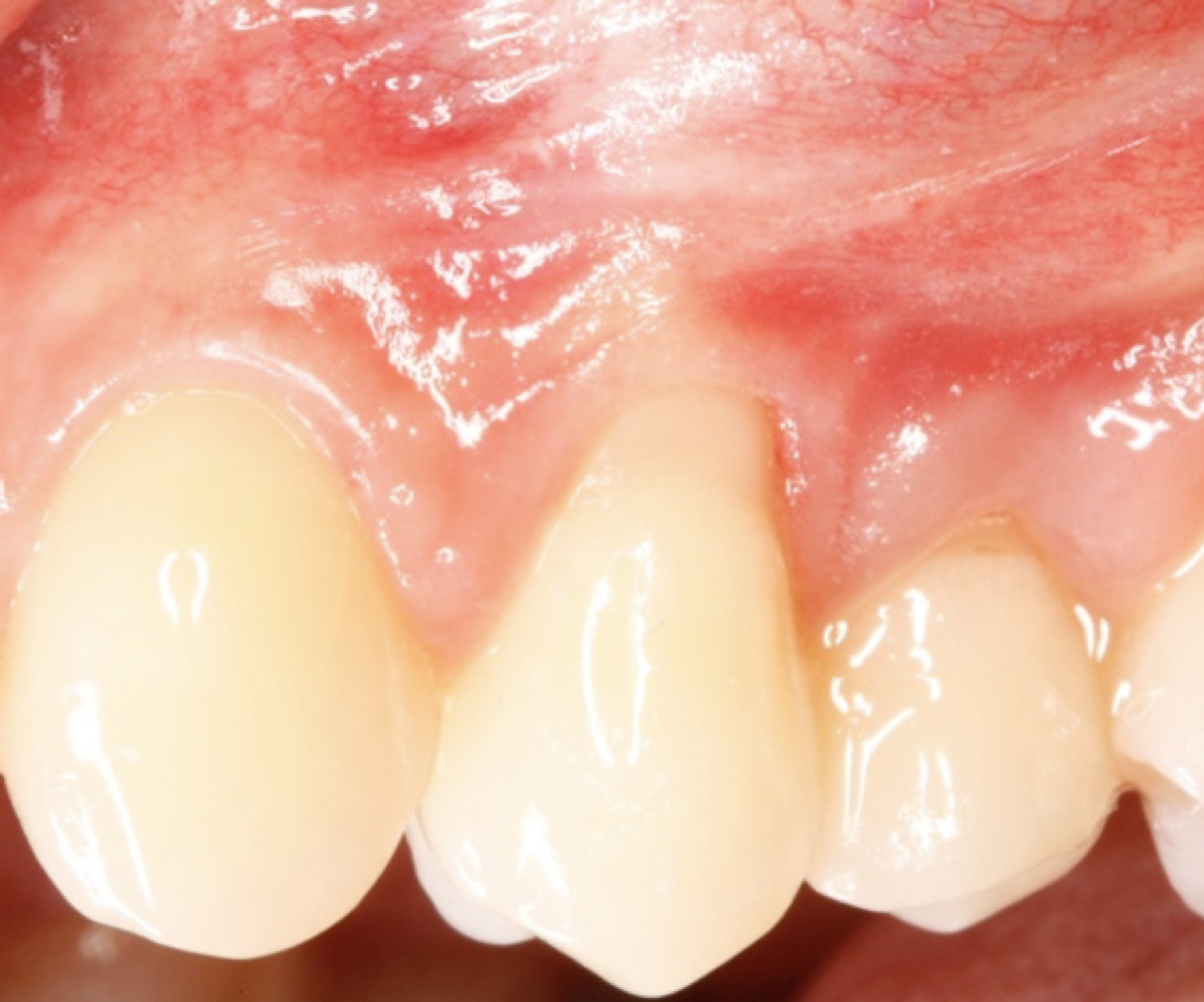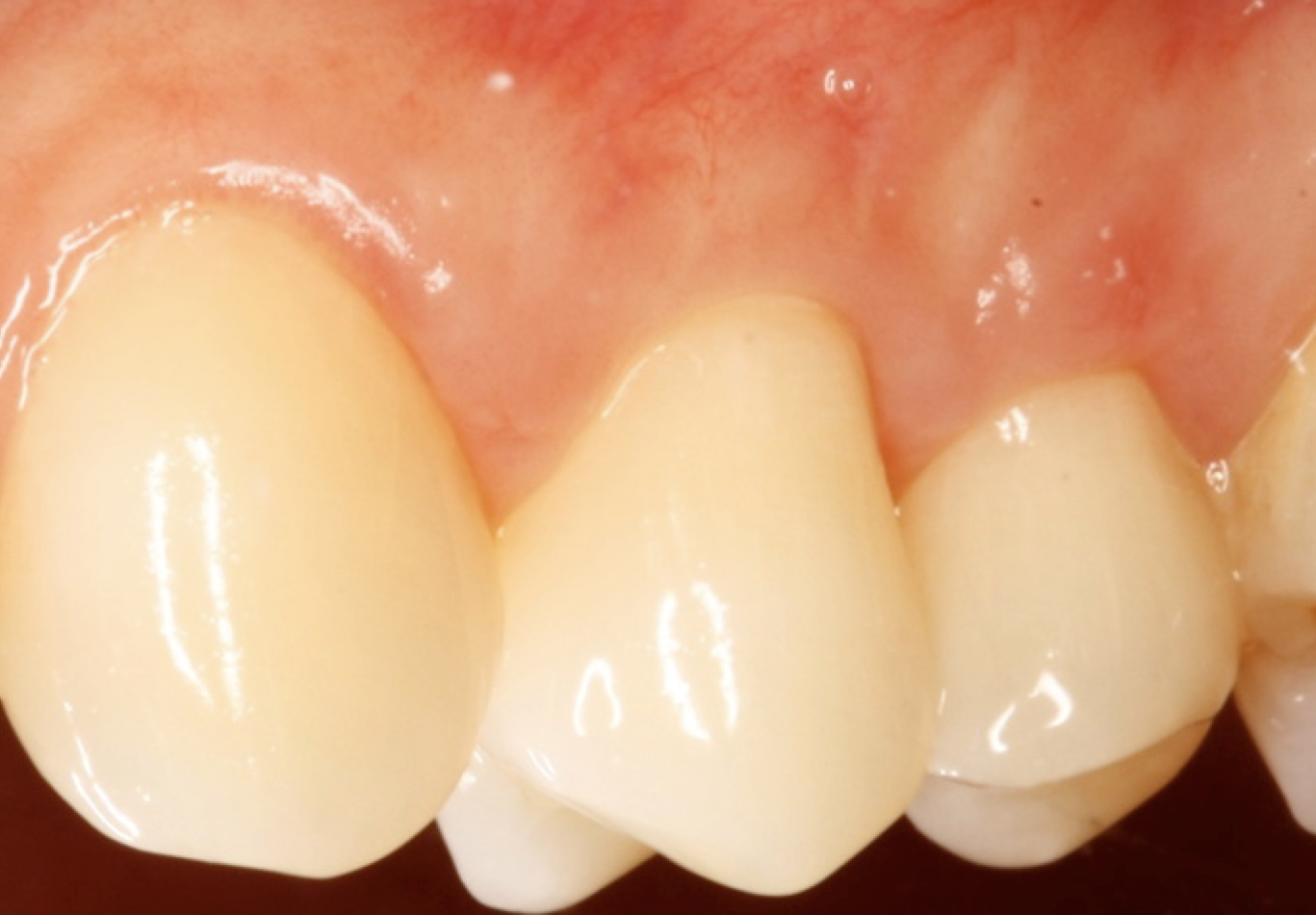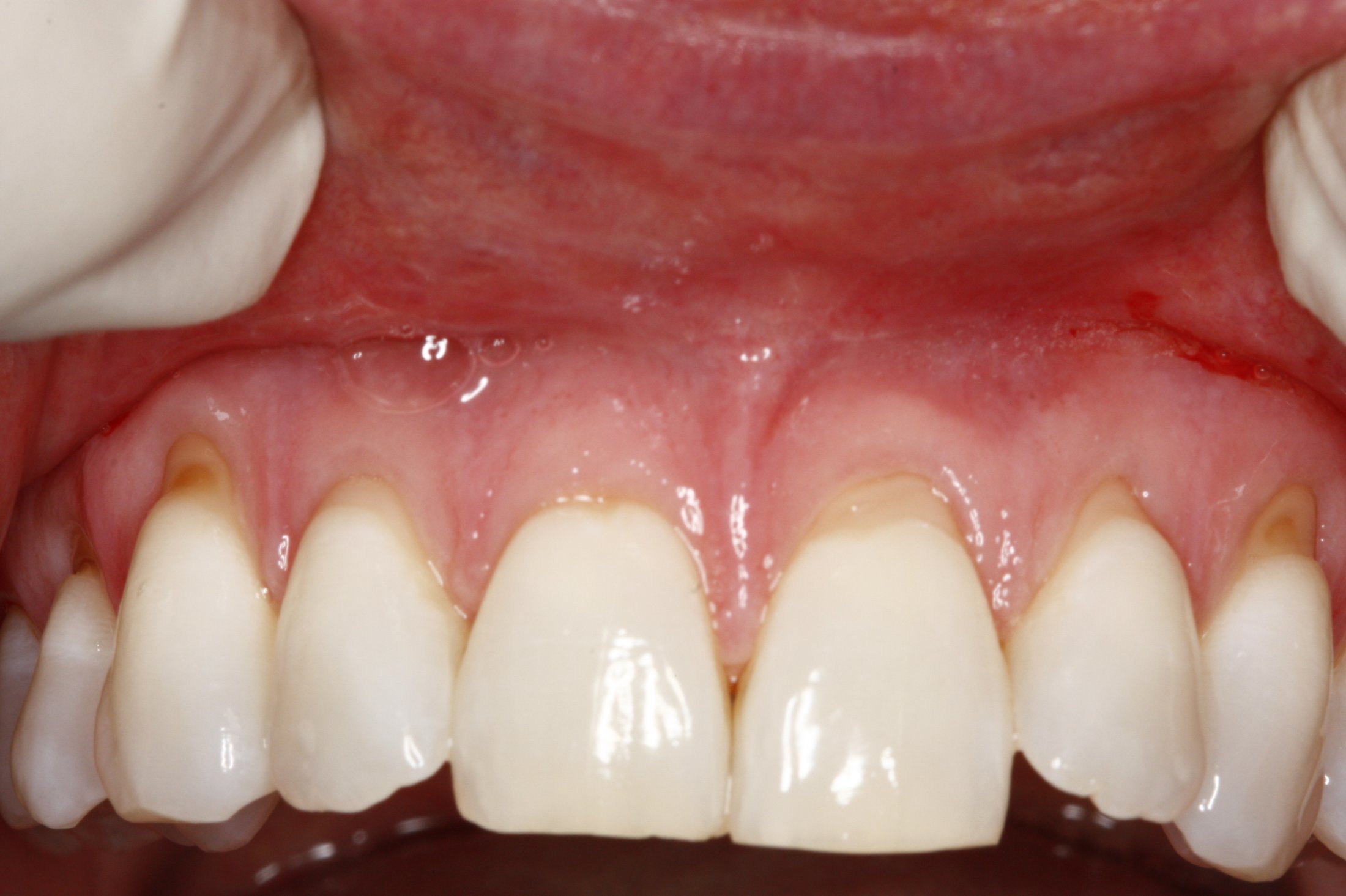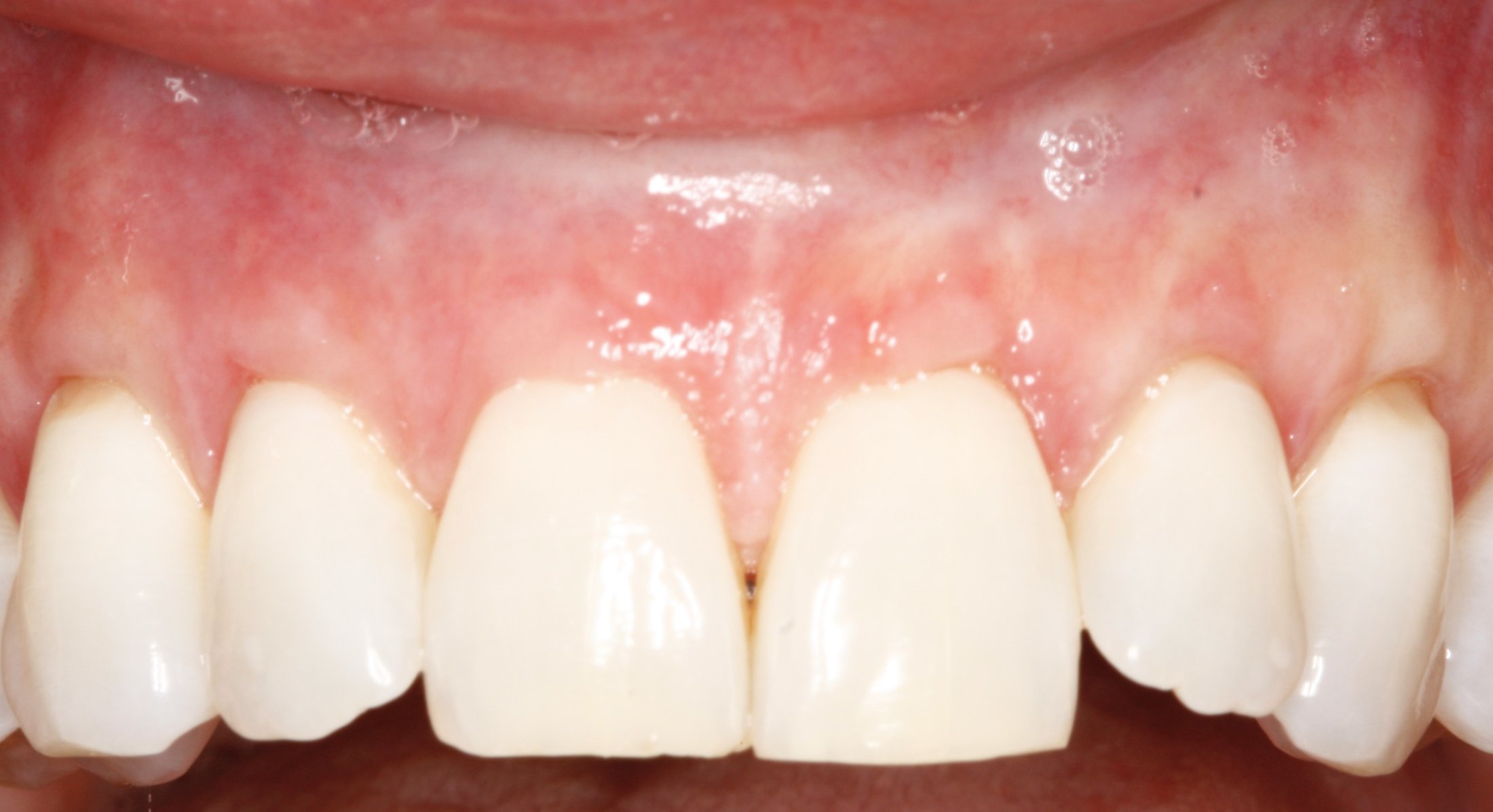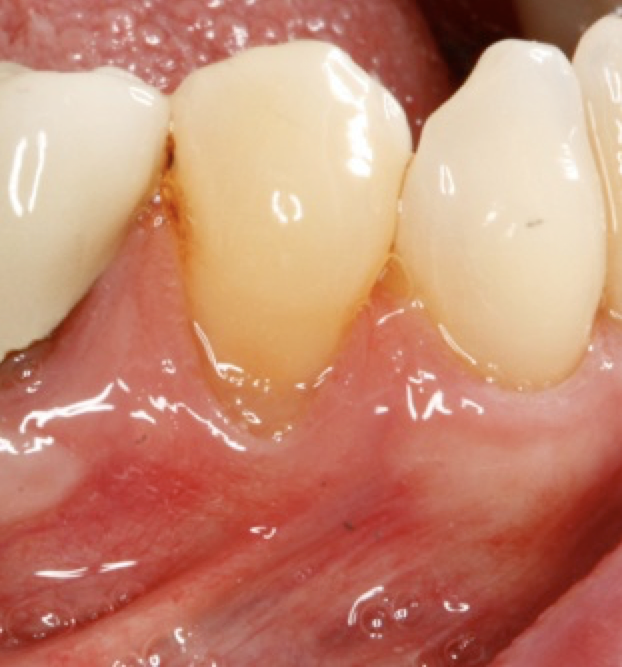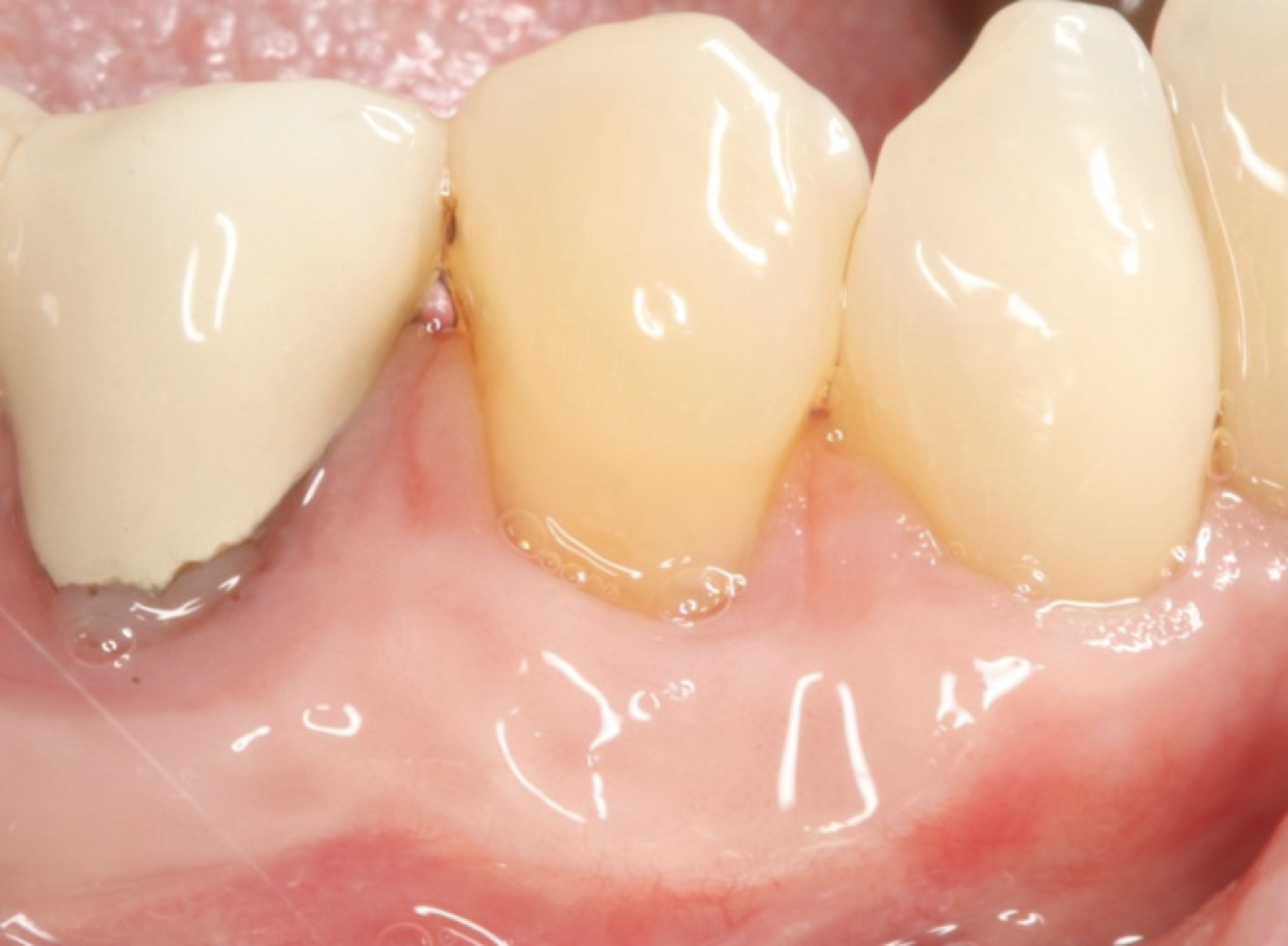

Gum Grafting
When gingival recession occurs, the body loses a physical defense against both bacterial penetration and trauma. When gum recession is a problem, gum reconstruction using grafting techniques is an option.
When there is only minor recession and healthy gingiva remains, no treatment other than modifying home care practices is necessary. When recession is advanced with loss of the thick attached gingival tissue, the first line of defense against bacterial penetration is lost.
In addition, gum recession often results in root sensitivity to hot and cold foods. When significant, gum recession can predispose to worsening recession and expose the root surface, which is softer than enamel, leading to root caries and root gouging.
Gingival reconstruction options include using the patient’s own tissue, either a gingival graft or a connective tissue graft. A thin piece of tissue is taken from the roof of the mouth or gently moved from adjacent areas to provide a stable band of attached gingiva around the tooth. The gingival graft may be placed in such a way as to cover the exposed portion of the root. The gingival graft procedure is highly predictable and results in a stable, healthy band of attached tissue around the tooth.
Another option is a human-derived tissue called acellular dermal matrix, which is designed to solve the problem of having a second surgical site.
Before and After Gum Grafting